
Hutting Culture in Scotland: Bothies, Cabins & Off-Grid Retreats
Hutting Culture: Why Escaping to a Hut, Cabin or Off-Grid Retreat Feels So Right, Right Now
In a world that feels increasingly fast, loud and always connected, many of us are quietly craving the opposite. Fewer notifications. Fewer demands. More time outdoors. More stillness.
Across Scotland, this longing is finding expression through a renewed interest in hutting culture — a return to simple shelters, huts, cabins and off-grid retreats that offer space to slow down, breathe deeply and reconnect with the landscape.
This isn’t about going backwards. It’s about remembering something we’ve always known: that life feels richer when it’s simpler.
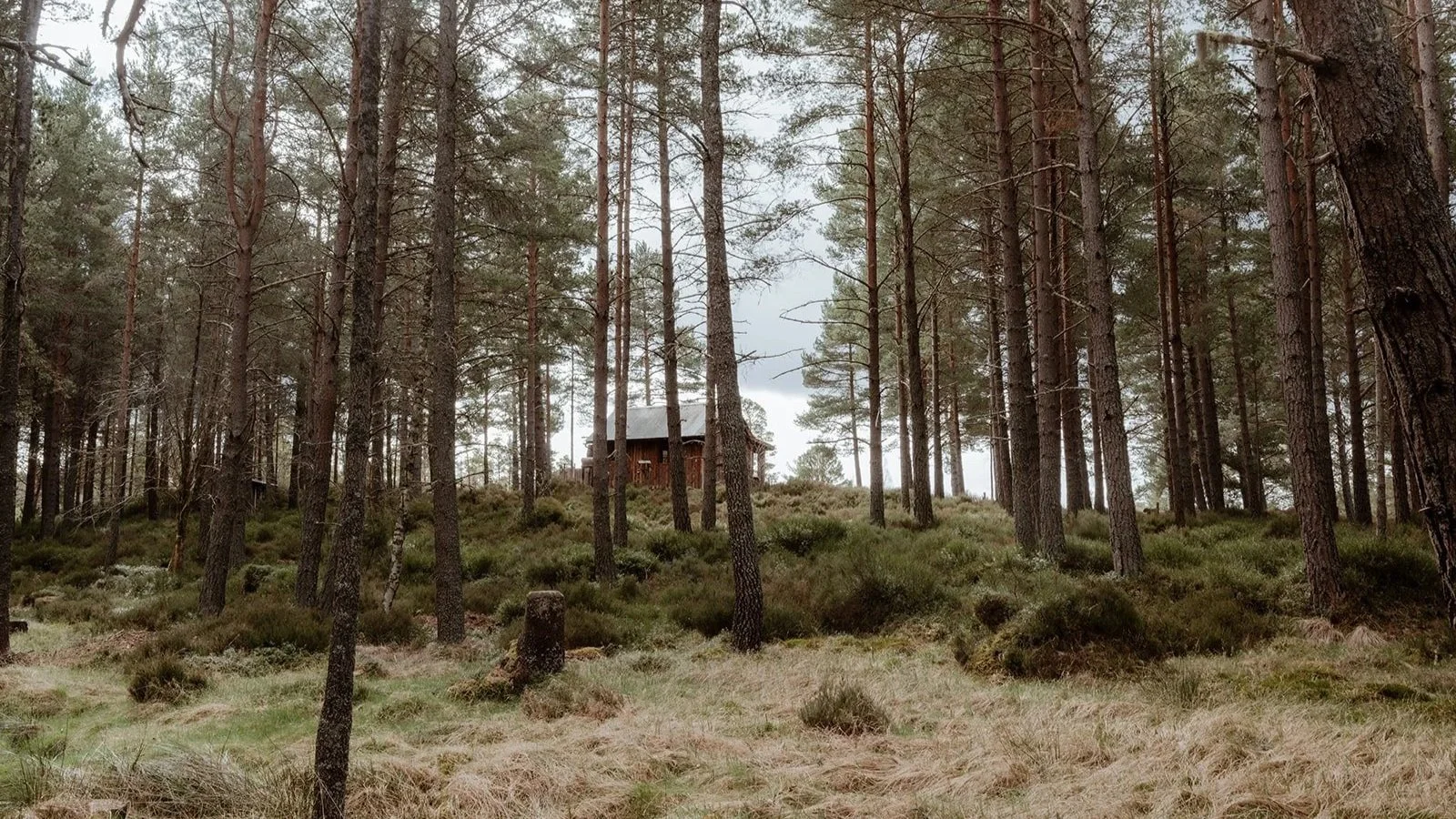
The Woodman’s Hut - Nestled gently in the Abernethy Forest, Cairngorms National Park
What Is Hutting Culture? A Return to Simple Escapes
At its core, hutting culture is about stepping away from excess and into intention. A hut or cabin doesn’t overwhelm with choice, instead, it gently removes it. What’s left is time, presence, and a closer relationship with the natural world, and those you have travelled with.
Slowing Down Through Simple Shelter
A simple shelter naturally invites a slower pace. When there’s no rush, no schedule dictated by screens or notifications. Days begin to follow a different rhythm. They become shaped by daylight, weather, and mood rather than obligation.
This is why huts, cabins and off-grid retreats have become such powerful places of escape. They don’t ask much of you. They simply allow you to be.
Why Huts, Cabins and Off-Grid Retreats Matter Today
As modern life grows more complex, these modest spaces offer clarity. Whether it’s a woodland hut, a mountain bothy, or a thoughtfully designed cabin, the appeal lies in what’s missing. Distraction, noise, and pressure.
Hutting culture desires simplicity.
Scotland’s Bothy Tradition and the Origins of Hutting Culture
Scotland has long understood the value of simple shelter. Long before the term “off-grid retreat” existed, there were bothies, quietly woven into the country’s hills and glens.
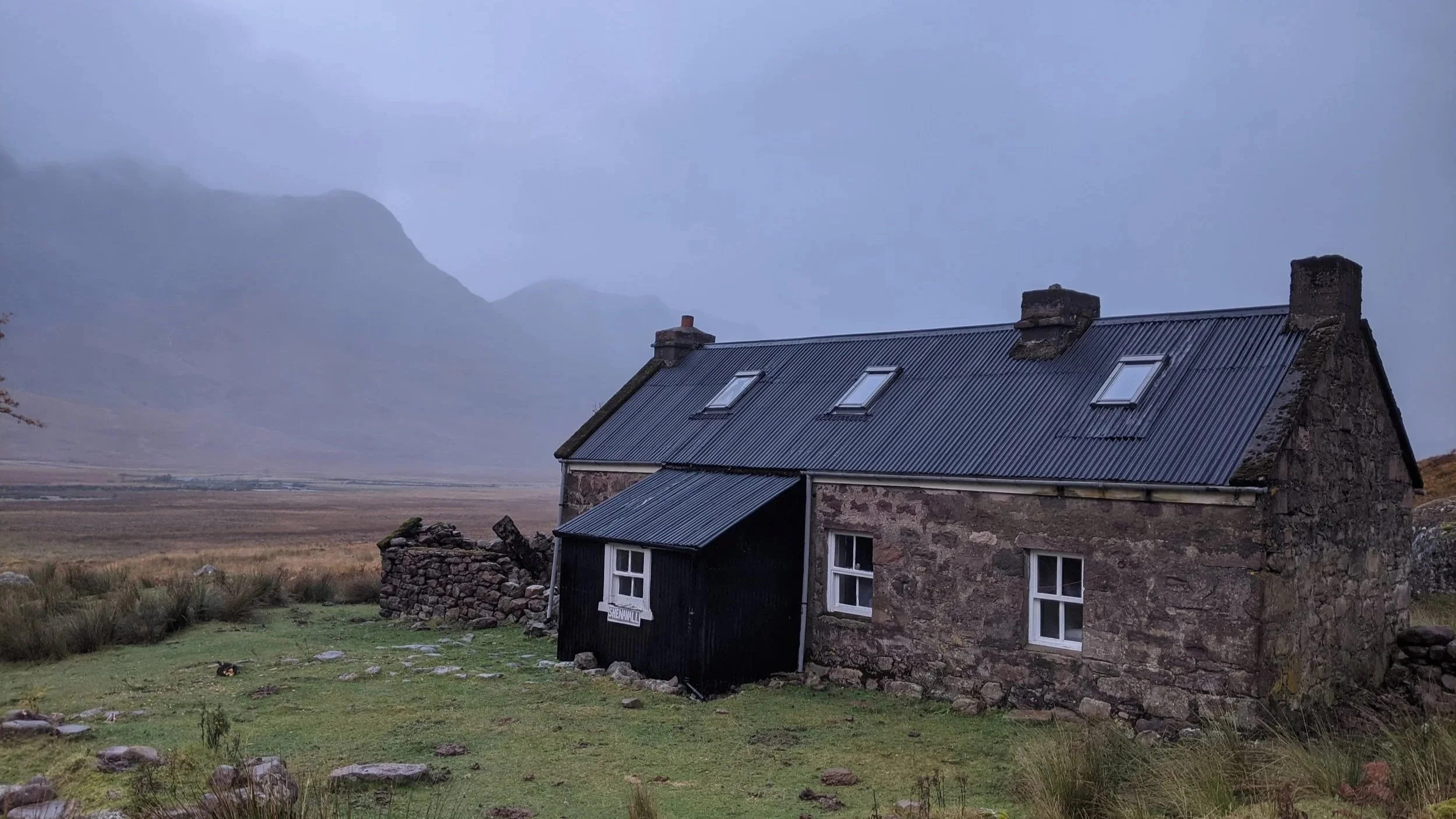
The Shenavall bothy at the base of An Tealleach
What is a Bothy? Scotland’s Original Off-Grid Escape
From the Scottish Gaelic word ‘bothan’, a bothy is a basic, unlocked shelter, usually found in remote areas. Originally built for shepherds, stalkers and estate workers, bothies later became vital refuges for walkers, climbers and mountaineers.
They are, by design, simple: four walls, a roof, often a fireplace, and very little else. No electricity. No running water, (except a near-by stream). No luxury. And yet, for many, they represent the purest form of escape.
Bothies Built for the Hills: Climbers, Shelter and Solitude
In the early and mid-20th century, climbers played a key role in shaping bothy culture. These shelters made it possible to access remote climbs and long mountain routes, offering warmth and rest after demanding days in the hills.
Bothies became places of quiet camaraderie, boots drying by the fire, maps spread on rough tables, drams in hand, and massively exaggerated stories exchanged before sleep. They allowed people to escape the city not just physically, but mentally.
Famous Bothies of the Cairngorms
The Cairngorms are home to some of Scotland’s most well-known bothies, each deeply tied to the landscape.
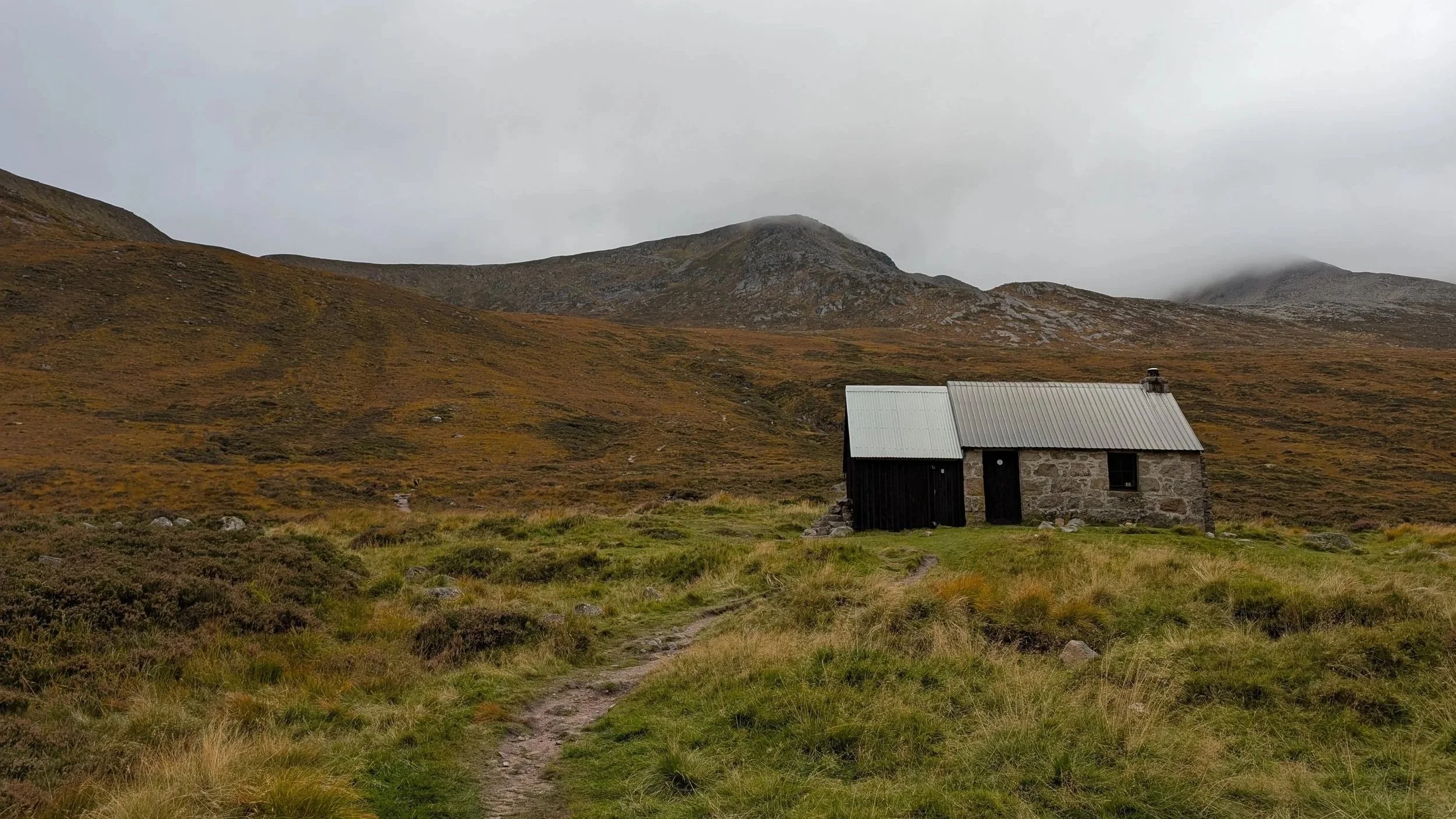
The Corrour Bothy sitting humbly within the the Larig Ghru
Corrour Bothy, set deep in the Lairig Ghru, has long offered shelter to those crossing this ancient droving pass. Hutchison Memorial Hut, built beneath dramatic cliffs, it stands as both a memorial and a vital refuge for climbers exploring the Cairngorms inspiring landscapes.
Reaching these places requires effort, and that effort is part of their meaning. Arrival feels earned. Time slows naturally.
While bothies were never meant as retreats in the way we understand them today, the spirit behind them is deeply connected to modern hutting culture.
From Bothies to Huts – How Hutting Culture Evolved in Scotland
While bothies were built for necessity rather than rest, they laid the foundation for modern Scottish hutting culture.
The Shared Spirit of Bothies and Huts
Bothies and huts share a common philosophy:
Respect for the land
Simplicity over excess
A sense of refuge
Modern huts and cabins take these values and soften them slightly — offering warmth, comfort and thoughtful design while keeping that essential feeling of being held by nature.
Why This Way of Escaping Resonates So Deeply Right Now
In a world of constant connection, many of us are craving places that encourage us to disconnect. Not as an act of resistance, but as an act of care.
Escaping Modern Life Through Nature
Time spent in nature has a way of quietening the mind. Without constant input, thoughts settle, creativity returns and sleep deepens. This growing desire for what’s often described as a digital detox helps explain why huts, cabins and off-grid retreats have become such powerful places of escape and restoration.
Slow Living, Wellbeing and Time Outdoors
Slow living isn’t about doing nothing — it’s about doing things with presence. Lighting a fire. Sitting with a book as the light fades. Sharing a meaningful conversation. Showering outside with water you’ve heated yourself.
These small moments, repeated, have a powerful effect on wellbeing.
Low-Impact Travel and Sustainable Escapes
Hutting culture also aligns with a growing desire to tread lightly. Small-scale, low-impact places allow people to experience the landscape without overwhelming it. A value deeply rooted in Scotland’s outdoor traditions.
If the idea of a digital detox resonates, you can explore it a little more here.
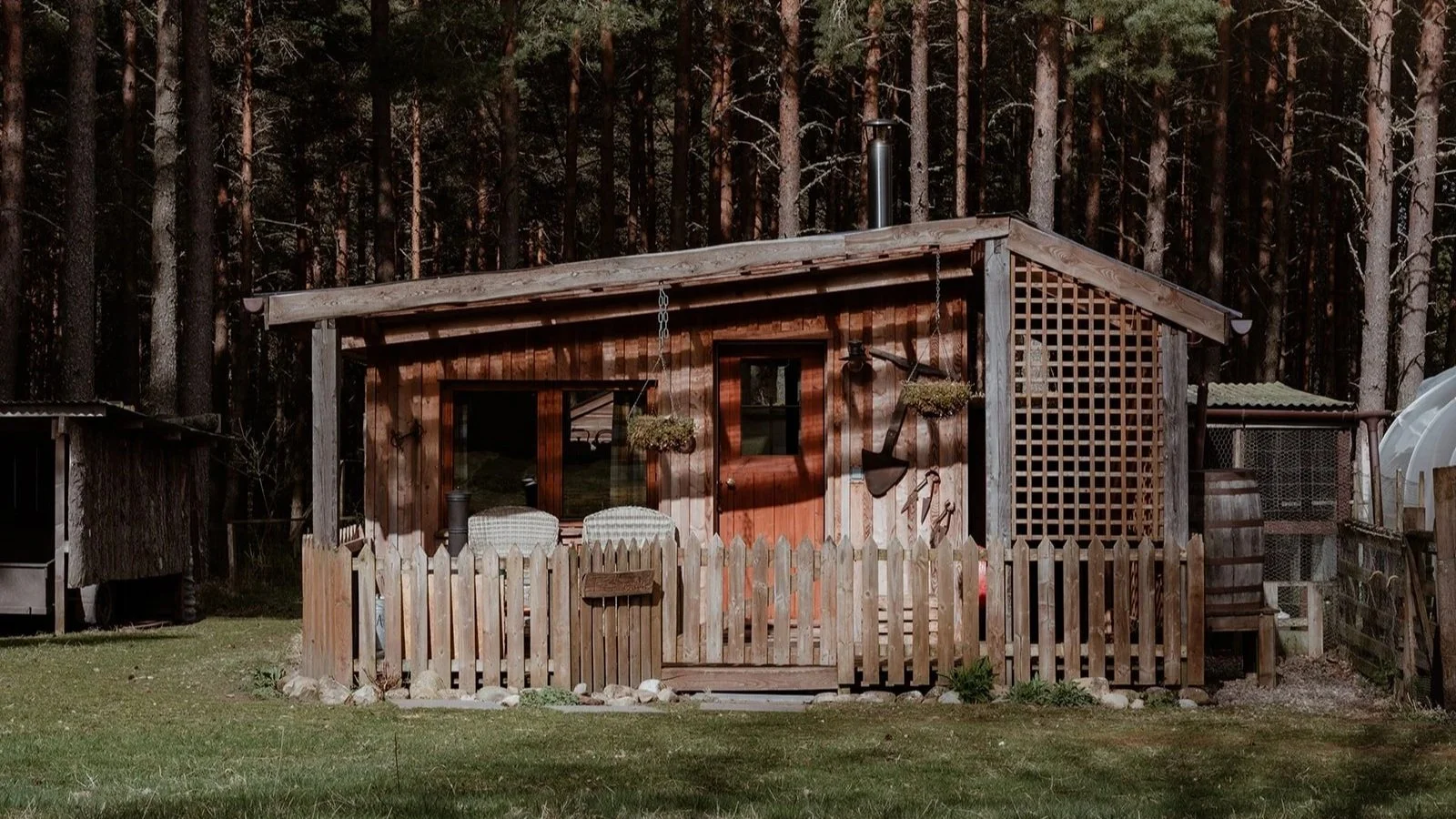
The Homestead - a wee cabin with crofting heritage in the Cairngorms National Park
Experiencing Hutting Culture in Scotland
Scotland is an extraordinary place to experience this slower way of life. Okay, I may be slightly bias on that one, but honestly it’s rich in wild spaces, deep history, and simple shelters that invite you to slow down.
Staying in a Bothy: A Traditional Scottish Escape
For some, the purest expression of hutting culture is a night in a bothy. Carrying what you need, respecting the space, and leaving no trace is part of the experience. One that connects you directly to the generations before you.
Choosing a Hut or Cabin Retreat in the Cairngorms
For others, a hut or cabin offers a gentler entry into this world. The Cairngorms, with their ancient forests, awe-inspiring and countless lochs, are perfectly suited to quiet retreats that feel removed without being remote.
Why did The Lazy Duck embrace this culture?
Hutting culture isn’t something The Lazy Duck adopted as a trend — it’s something that has been quietly woven into its story from the very beginning.
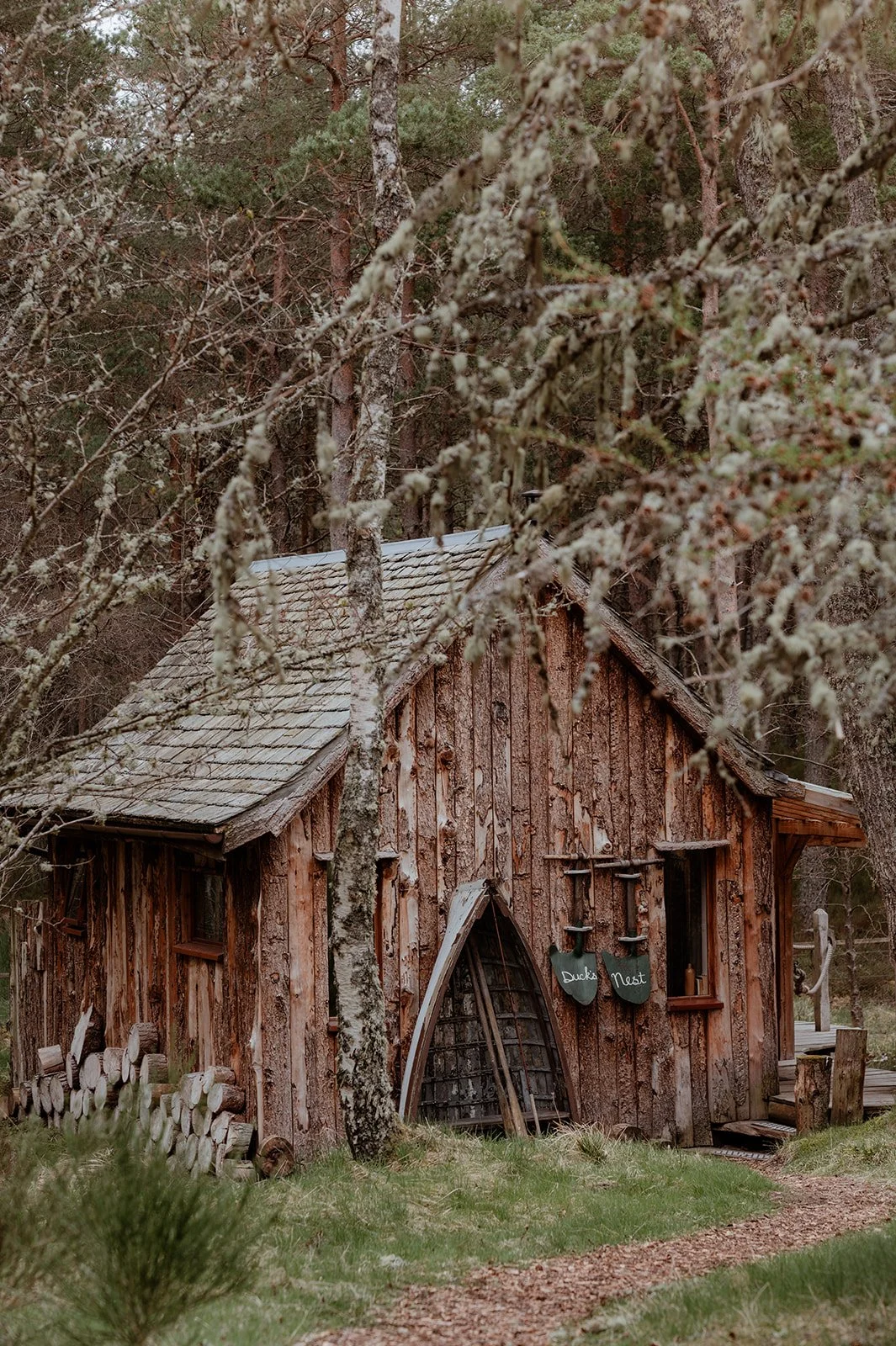
The Duck’s Nest - pond-side, romantic cabin in the Cairngorms National Park
David and Valery first moved to the area just outside Nethy Bridge in the 1970s. Over time, they fell deeply in love with the landscape: the changing light through the trees, the stillness of the forests, and the sense of space that comes from living so close to nature. The more they appreciated these surroundings, the stronger the feeling became that this way of life was something worth sharing.
That desire — to invite others to slow down and experience the beauty of the Cairngorms — eventually led to the creation of The Lazy Duck.
In 1999, it opened as a small bunkhouse and low-impact micro campsite, rooted in simplicity and respect for the land. But the deeper influence behind the place was still forming.
Inspired by Scandinavian Hytte Culture
Through work trips to Scandinavia and Russia, David spent weeks at a time staying in a hytte — a simple cabin set in remote landscapes, often used as a families holiday destination throughout Sweden and Norway. He worked with school groups, and saw first-hand how powerful these spaces could be. Removed from modern distractions, people naturally slowed down. They noticed more. They connected with nature, with each other, and with themselves.
This Scandinavian hytte culture echoed something already familiar in Scotland: the spirit of the bothy. Simple shelter. Purposeful design. A slower rhythm of life shaped by the outdoors.
It became clear that huts weren’t just places to stay. They were tools for wellbeing.
From Idea to Off-Grid Huts in the Cairngorms
Before long, David began drawing up plans for the first off-grid cabin at The Lazy Duck.
In 2011, The Woodman’s Hut was built — a thoughtfully designed, low-impact space created using local timber and local tradespeople. Its elemental design and sensitive approach to the landscape earned it a design award, but more importantly, it captured the essence of hutting culture: simplicity without sacrifice.
As Valery often says, The Lazy Duck grew organically from there.
Two more almost off-grid huts followed, alongside the bunkhouse — each created with the same intention: to offer couples and families a place to step away from modern pressures and into a quieter, more grounded way of living.
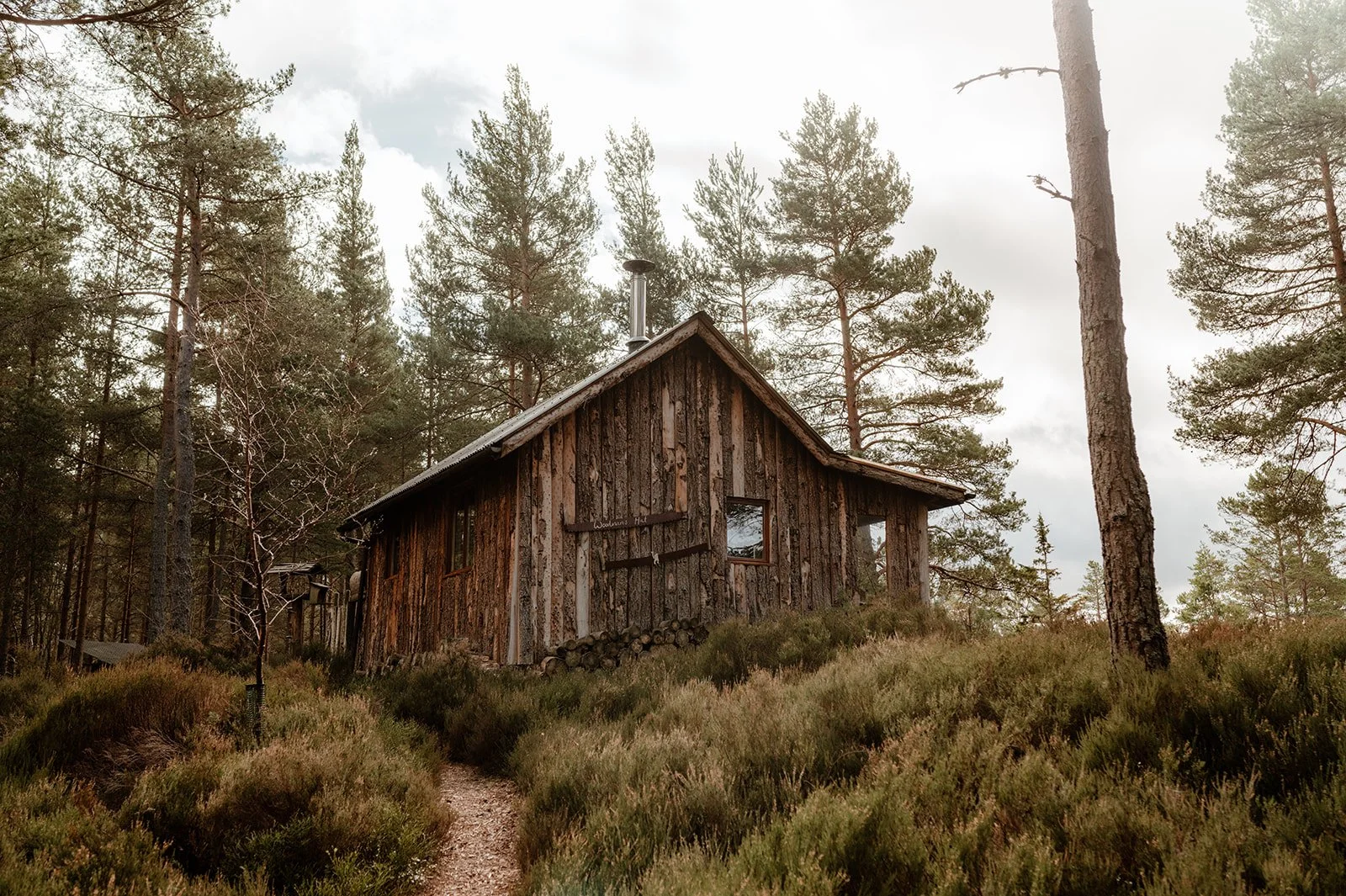
The Woodman’s Hut - The Lazy Duck’s first off-grid hut built in 2011
The Future of Hutting Culture
As life continues to accelerate, the need for places that allow us to slow down becomes ever more important. Hutting culture — whether expressed through remote bothies, woodland huts, or simple cabins — speaks to something deeply human: the desire for refuge, rhythm and reconnection.
This way of escaping isn’t about going further or doing more. It’s about choosing spaces that strip life back to its essentials, where time is shaped by daylight, weather and mood rather than schedules and screens. In Scotland, with its long tradition of simple shelter and vast natural landscapes, this culture feels not only relevant, but enduring.
The Lazy Duck Sits Naturally Within this Story.
Rooted on the edge of the Cairngorms, it draws together the spirit of the bothy, the influence of Scandinavian hytte culture, and a modern understanding of comfort and care. It offers a place where slowing down feels intuitive, where days unfold gently, and the landscape quietly does the work.
From the first off-grid hut to the calm, elemental spaces that exist today, The Lazy Duck has organically moved with intention rather than urgency. It remains a place for those seeking a deeper connection to nature and a simpler way of being. Not just as an escape from everyday life, but as an invitation to return to what matters.
If hutting culture resonates with you, perhaps it’s time to experience it for yourself.
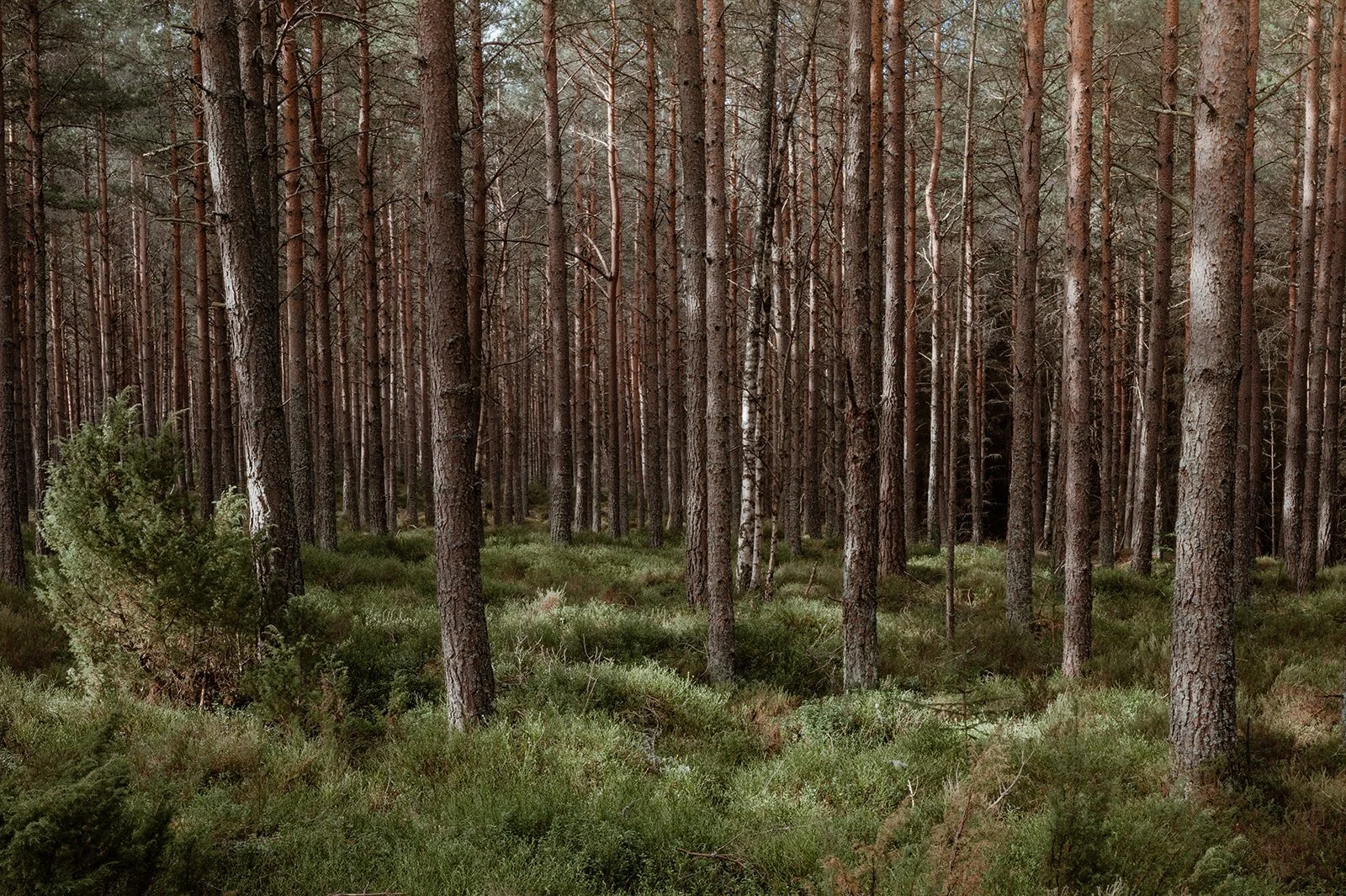
The Abernethy Forest in the heart of the Cairngorms National Park
